In today’s competitive online market, eCommerce sites face the challenge of standing out. You may wonder if your marketing strategy should focus solely on SEO or PPC, or if using both is essential for success.
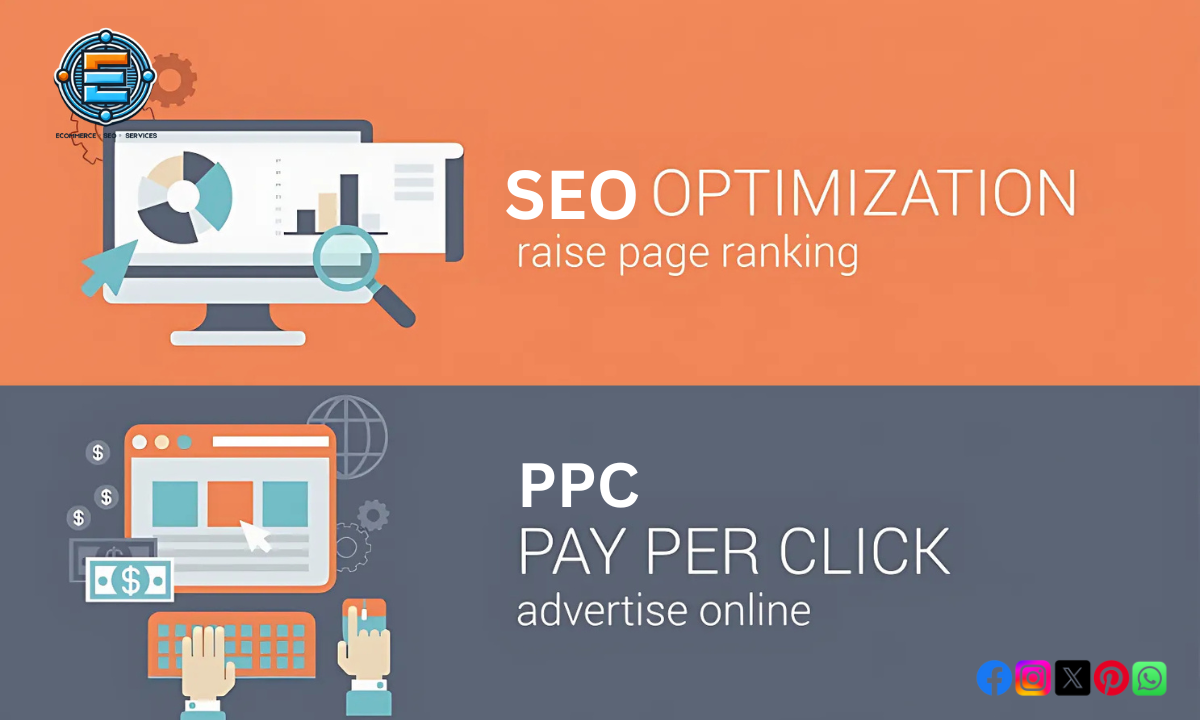
To truly maximize your reach and sales, stores need both eCommerce SEO services and PPC working together.
SEO helps improve your site’s organic ranking, bringing in long-term traffic without direct costs for clicks. On the other hand, PPC offers immediate visibility through paid ads, driving quick results.
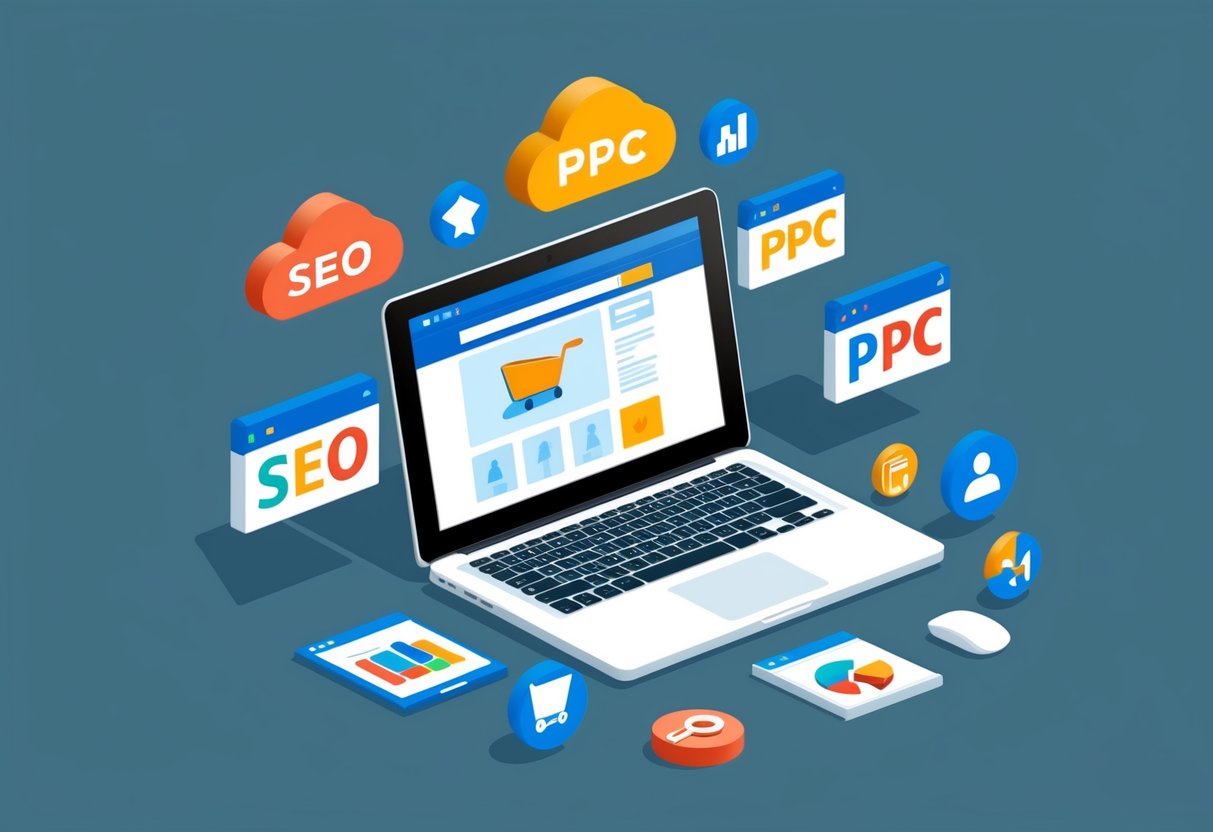
Combining these two digital marketing tactics allows you to create a balanced approach that captures both short-term wins and sustainable growth. By understanding how SEO and PPC complement each other, you can effectively boost your eCommerce performance.
The Importance of SEO for E-Commerce Websites
Effective SEO is crucial for e-commerce websites. It not only helps in attracting more visitors but also enhances user experience and builds long-term credibility. Understanding these aspects can significantly impact your online store’s performance.
Building Organic Traffic
SEO plays a vital role in generating organic traffic to your e-commerce site. Unlike paid advertising, organic traffic is free and sustainable.
By optimizing your website for search engines, you increase your chances of appearing in top search results.
Focus on keyword research to find relevant terms your customers use. This allows you to create content that addresses their needs. Use these keywords strategically in product descriptions, title tags, and meta descriptions.
Additionally, building backlinks from reputable sites enhances your authority, further boosting your visibility. This leads to more potential customers discovering your products without relying solely on paid ads.
Enhancing User Experience
A well-optimized site provides a better user experience. SEO helps improve site speed, mobile responsiveness, and overall navigation.

These factors are critical as they influence whether visitors stay on your site or leave.
Search engines prioritize sites that offer a good user experience. This means having clear product categories, easy-to-use filters, and fast loading times. An organized layout encourages visitors to explore more products.
Consider using high-quality images and detailed descriptions to engage users. This not only helps in conversions but also encourages repeat visits, contributing to long-term success.
Long-Term Results and Brand Credibility
Investing in SEO delivers long-term benefits for your e-commerce business. Unlike PPC advertising, which stops generating traffic once you stop paying, effective SEO efforts can keep your site ranked for years.
A strong SEO strategy also boosts brand credibility. Users tend to trust sites that rank highly in search results. This trust translates into increased sales and customer loyalty.
By consistently providing valuable content and maintaining your site’s SEO health, you create a positive reputation. Your brand becomes a go-to choice for consumers, leading to sustained growth over time.
The Importance of PPC for E-Commerce Websites
PPC is one of the fastest ways to bring targeted shoppers to your eCommerce store. While SEO builds long-term visibility, PPC helps you get instant traffic from people who are already searching for products like yours.
For online stores, speed matters. You may have new products, seasonal offers, limited-time deals, or best-selling items that need quick attention. PPC helps you place those products in front of buyers right away.
A well-planned PPC strategy can support your SEO work, improve sales, and give you useful data about what your customers want. When managed correctly, PPC is not just about running ads. It is about testing demand, finding profitable keywords, improving product pages, and increasing return on ad spend.
Getting Immediate Visibility
One of the biggest benefits of PPC is fast visibility. SEO takes time because search engines need to crawl, understand, and rank your pages. PPC can place your products at the top of search results almost instantly.
This is very useful for eCommerce websites that want quick traffic. For example, if you launch a new product category, Google Ads or shopping ads can help you get visitors before your SEO rankings grow.
PPC also helps you appear for highly competitive keywords where organic ranking may take months. If your competitors are already ranking for terms like “buy running shoes online” or “best skincare products,” PPC gives you a way to compete right away.
From an eCommerce marketing point of view, this quick visibility can help you test product demand, collect sales data, and understand which keywords bring serious buyers.
Targeting High-Intent Buyers
PPC allows you to target people who are more likely to buy. This is very important for eCommerce stores because not every visitor has the same value.
Some users are only researching. Others are ready to purchase. PPC lets you focus on buyer-intent keywords such as:
“buy online”
“best price”
“free shipping”
“discount”
“near me”
“same day delivery”
These keywords often show that the customer is close to making a purchase.
You can also target users based on location, device, age group, interests, search behavior, and past website visits. This level of control makes PPC powerful for online stores.
For example, if someone visited your product page but did not buy, you can use remarketing ads to bring them back. This helps reduce lost sales and gives your store another chance to convert visitors into customers.
Promoting Offers, Sales, and Seasonal Campaigns
PPC is excellent for short-term campaigns. eCommerce stores often run sales during events like Black Friday, Eid, Christmas, New Year, Valentine’s Day, or end-of-season clearance.
SEO may not be fast enough for these limited-time offers. PPC gives you the speed you need.
You can create ads for:
Flash sales
Discounted products
New arrivals
Best-selling items
Clearance stock
Holiday offers
Bundle deals
Free shipping campaigns
This is especially useful when you need quick results. If your offer is strong and your product page is well-optimized, PPC can bring fast traffic and sales.
As an experienced eCommerce SEO and PPC strategy approach, I always recommend sending paid traffic to pages that are ready to convert. A weak product page can waste ad spend. A strong page with clear images, reviews, benefits, price, shipping details, and a strong call to action can turn PPC traffic into real revenue.
Testing Keywords and Product Demand
PPC is not only for sales. It is also a smart testing tool.
With PPC, you can quickly learn which keywords bring clicks, which products get attention, and which pages convert better. This data can also improve your SEO strategy.
For example, if a PPC campaign shows that a keyword has a high conversion rate, you can use that keyword in your SEO content, product titles, category pages, meta titles, and product descriptions.
This saves time because you are not guessing. You are using real customer behavior.
PPC data can help you understand:
Which keywords drive sales
Which products people want most
Which ad copy gets more clicks
Which landing pages convert better
Which locations bring better buyers
Which devices perform best
For eCommerce SEO, this information is valuable. It helps you create better category pages, improve product content, and focus on keywords that can bring real profit.
Improving Brand Awareness
PPC also helps build brand awareness. Even if users do not buy on the first visit, seeing your brand in search results, shopping ads, display ads, and remarketing ads can make your store more familiar.
This matters because people often compare different stores before buying. If they see your brand multiple times, they may start trusting it more.
For new eCommerce websites, PPC can be a strong way to enter the market. SEO may take time to build trust and rankings, but PPC can help your brand appear in front of the right audience from day one.
When PPC and SEO work together, your store can appear in both paid and organic results. This increases your search visibility and makes your brand look stronger in the customer’s mind.
Tracking Performance and ROI
One major benefit of PPC is clear tracking. You can see how much you spend, how many clicks you get, how many sales come from ads, and what your return is.
This makes PPC very measurable.
For eCommerce stores, you can track:
Cost per click
Conversion rate
Cost per sale
Return on ad spend
Average order value
Cart abandonment
Best-performing products
Revenue from each campaign
This data helps you make smarter decisions. You can increase budget on profitable campaigns and stop ads that are wasting money.
However, PPC needs careful management. Running ads without proper tracking, keyword research, negative keywords, product feed optimization, and landing page testing can waste your budget quickly.
A successful PPC campaign is not just about getting traffic. It is about getting the right traffic at the right cost.
Why PPC Works Best With SEO
PPC and SEO should not be treated as separate strategies. They work better when used together.
SEO builds long-term traffic and reduces your need to pay for every visitor. PPC brings quick traffic, faster testing, and more control. Together, they help your eCommerce store grow from both sides.
For example, PPC can bring immediate sales while your SEO pages are still growing. At the same time, SEO can reduce your long-term customer acquisition cost by bringing free organic traffic.
A smart eCommerce marketing strategy uses PPC for speed and SEO for stability.
When both channels are aligned, you can dominate more search results, understand your customers better, and create a stronger path to long-term growth.
FAQs
Understanding the specific benefits of SEO and PPC can help you make informed decisions for your ecommerce business. Here’s a closer look at common questions regarding these marketing strategies.
How does SEO benefit an ecommerce business?
SEO improves your site’s visibility in search engines, making it easier for potential customers to find your products. By optimizing your website for relevant keywords, you attract organic traffic, which can lead to higher sales over time. A strong SEO strategy also builds brand trust and credibility.
What are the advantages of PPC for online shopping platforms?
PPC allows you to gain immediate visibility on search engines and social media platforms. You can target specific audiences based on their behaviors and interests, leading to higher conversion rates. The quick results from PPC campaigns help you test products and adjust your marketing strategies effectively.
Can SEO and PPC strategies be integrated, and if so, how?
Yes, integrating SEO and PPC can enhance your marketing efforts. You can use PPC data to identify effective keywords that should also be targeted in your SEO strategy. This synergy helps optimize both short-term campaigns and long-term positioning for your e-commerce site.
What role does SEO play in the long-term growth of an ecommerce site?
SEO is crucial for sustainable growth as it helps you build a strong online presence. Over time, effective SEO practices enhance your site’s authority, leading to more organic traffic without ongoing ad spend. This long-term approach allows you to maintain and grow your customer base without relying solely on paid ads.
How do PPC campaigns impact customer acquisition for ecommerce stores?
PPC campaigns can significantly speed up customer acquisition by placing your products directly in front of interested shoppers. They generate immediate traffic, which can lead to faster sales. Data from PPC campaigns also provides insights that can refine your overall marketing strategy.
In what ways can SEO and PPC complement each other for better online visibility?
SEO and PPC can work together to enhance your online visibility. SEO builds long-term traffic, while PPC can bring immediate results, covering any gaps. This combined approach not only attracts diverse traffic sources but also helps you monitor trends and make informed marketing decisions.