Hiring is a critical process. When you have a set of standards for questions to ask an ecommerce SEO company, you’re almost done. You have hired an intelligent SEO team.
But when you don’t have standards to interview the SEO Company, you might be in trouble one day.
You don’t usually realize you’ve hired the wrong ecommerce SEO company at the start. On that first afternoon, everything feels like a honeymoon. You’re looking at a sleek slide deck, nodding at terms like “Topical Authority,” and feeling a rush of hope that this specific ecommerce SEO services company is the one to finally fix your search visibility.
You imagine your high-margin products clearing the warehouse racks because a professional ecommerce SEO company has finally unlocked the “Buy Box” intent you’ve been missing.
But fast forward six months. You’re staring at a Google Analytics dashboard. The line is going up—slightly—but your warehouse is quiet. Your pallets aren’t moving.
You’re experiencing the SEO Paradox: You have more traffic than ever, but you’re somehow making less profit. This happens because most agencies aren’t lying to you; they just don’t understand the Hidden Intent of a digital buyer. They are chasing clicks while you are chasing revenue. Before you sign another six-month contract, you need to stop asking “What will you do?” and start asking “How do you think?”
Why Your Strategy Fails Without a Specialized Ecommerce SEO Company
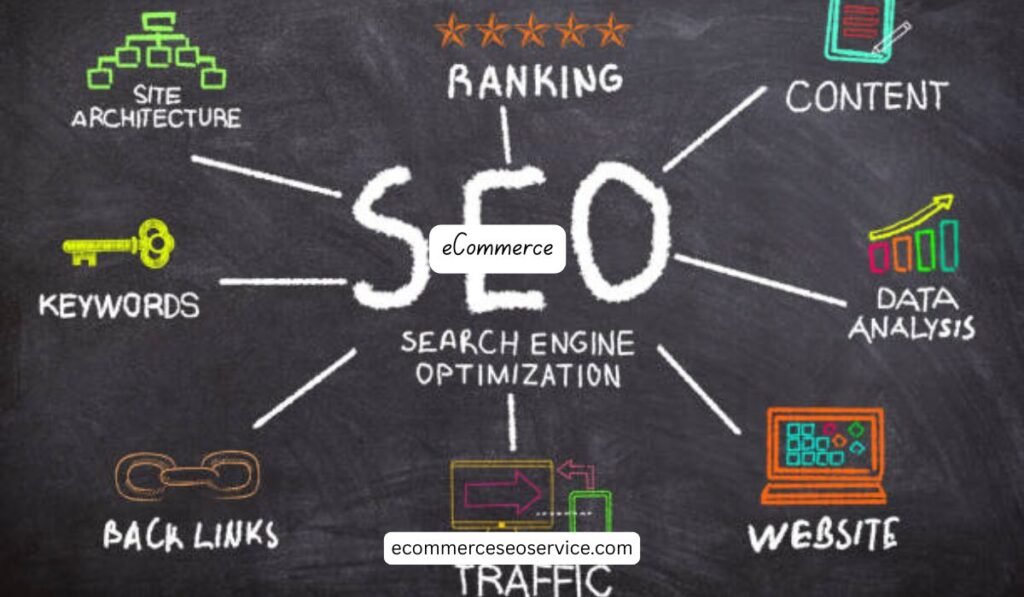
The first place a generalist agency slips up is the technology. They’ll tell you SEO is just content and links. But in the world of high-volume digital retail, the website is a high-performance engine. If the technical timing is off, the car won’t move, no matter how much “blog fuel” you pour into it.
Ask them about your platform—not just if they use it, but how they break it. What you’re really trying to figure out here is if they understand the “Technical Debt” of Shopify, Magento, or WooCommerce. For example, if you have a store with 5,000 SKUs, you likely have Faceted Navigation (those filters for Size, Color, and Price).
A standard agency will ignore those filters. A pro ecommerce SEO company will tell you that those filters are “Crawl Traps” currently eating your budget. They’ll explain how they prevent Google from getting lost in a maze of “Size 12/Blue/Under $100” pages so that your main money-making categories actually rank.
1. Intent Over Volume | Finding the “Buy Box” Mindset
Most agencies show you a list of keywords with massive search volume. It looks impressive on a spreadsheet. But 10,000 people searching for “History of sofas” will never equal 100 people searching for “Luxury velvet sectional sofa with fast shipping.”
How a Top Ecommerce SEO Company Maps the User Journey
A strategic partner understands that in 2026, Google’s AI (SGE) answers the simple “What is…” questions right on the search page. If your agency is focusing on those, you’re losing. You need a partner who targets the Commercial and Transactional intent.
Ask them: “How do you optimize our Category Pages vs. our Blog?” In ecommerce, the Category Page is your most profitable real estate.
A real expert knows that category pages are for intent, while blogs are for authority. If they plan to spend 80% of your budget on blog posts, they are building a library, not a store.
2. The Inventory Bridge | Syncing SEO with the Warehouse
If your SEO team doesn’t know what is sitting in your warehouse, they are working in a vacuum. The most common failure in the industry is ranking products that are out of stock. It’s a waste of crawl budget and a guaranteed bounce for the user.
A pro-level ecommerce SEO company will ask for your marketing calendar. They want to know which products have the highest margins and which shipments are arriving in your 3PL Warehouse 60 days from now.
SEO takes time. If they start optimizing for a product the day it arrives, you’ve already missed the window. They should be building the “authority” for that product while it’s still on a container ship.
3. The “Zero-Gap” Handoff | Managing Out-of-Stock Logic
Since we’re talking about inventory, ask them: “What happens to our SEO when a product sells out?” Most “experts” will tell you to just let the page return a 404 error. This is professional negligence. Every time you delete a page, you’re throwing away the “Link Juice” it earned.
A sophisticated partner will suggest a Zero-Gap Strategy:
- Temporary Out-of-Stock: Keep the page live, add an “Email Me When Available” button, and show “Related Products.”
- Permanently Discontinued: Use a 301 Redirect to the most relevant parent category to preserve the SEO authority.
4. E-E-A-T and the Power of Real Experience
In 2026, Google values Experience above all else. With the internet being flooded by AI-generated “junk,” Google is looking for signs of a real human.
Ask them how they leverage your Customer Data and Reviews. A real expert won’t just say “Reviews help conversions.” They will show you how to use Schema Markup to pull those 5-star ratings into the search results. They will harvest the “natural language” your customers use in reviews to find long-tail keywords that no software tool can find. If they aren’t asking you for expert quotes, they are just producing generic noise.
5. Digital PR | Why “Buying Links” is a Death Sentence
Backlinks are still the “currency” of the internet, but the exchange rate has changed.
Listen for the phrase “Earned Media.” A high-level ecommerce SEO company doesn’t buy link packages; they earn them. They do this through Digital PR. They create a data report or a unique guide and pitch it to journalists.
One link from a reputable news site or a high-traffic industry blog is worth more than 10,000 links from a “link farm.” If they can’t explain their outreach strategy without using the word “vendor,” keep looking.
6. The SKU Complexity Scorecard
SEO for a boutique with 20 products is a hobby. SEO for a marketplace with 20,000 SKUs is a logistical battle.
Request a Case Study that matches your complexity. You want to see how they handled Keyword Cannibalization (when your own products fight each other for the same spot). You want to see how they structured a “Mega-Menu” without overwhelming the user.
If they show you results for a local plumber, they are not prepared for the “Technical Debt” of a scaling brand.
7. Transparency | Decoding the “Agency Magic”
Many agencies hide behind “proprietary techniques.” In SEO, “secret” usually means “we don’t want you to see how little we’re actually doing.”
Demand a Live Dashboard. You should be able to see your Organic Revenue, Assisted Conversions, and Customer Acquisition Cost (CAC) in real-time. You shouldn’t have to wait for a monthly PDF to know if your business is growing. You can’t pay your employees with “Rankings.” You pay them with profit.
15 Questions to Ask an Ecommerce SEO Company
I. Technical & Infrastructure (The Foundation)
- Crawl Budget Management: How do you handle site speed and indexing for 10,000+ SKUs?
- Faceted Navigation: What is your specific protocol for preventing “Crawl Traps” in our product filters?
- Platform Expertise: Have you managed the “Technical Debt” of Shopify, Magento, or WooCommerce at scale?
- Mobile & Core Web Vitals: How will you improve our LCP and CLS without sacrificing high-res product imagery?
- Out-of-Stock Logic: What is your “Zero-Gap” strategy for preserving SEO value when a product sells out?
💡 Pro Tip: Request a sample Technical Audit. If it is a generic export from a tool like Ahrefs without manual commentary on your specific site architecture, they aren’t doing the deep work required for high-performance retail.
II. Revenue & Intent (The Money Pages)
- Keyword Mapping: Do you prioritize “Bottom-of-Funnel” (Transactional) keywords over high-volume “Informational” fluff?
- Category Page Strategy: How will you transform our category pages into “Aisles” that rank and convert?
- AI-Overview (SGE) Prep: How are you optimizing our content to appear in Google’s AI-generated summaries?
- PPC Integration: Will you use our Paid Search data to identify high-converting keywords for our organic strategy?
- Internal Linking: How do you use “Siloing” to pass authority from high-performing blogs to money-making product pages?
💡 Pro Tip: Examine their content balance. If they suggest spending 80% of the budget on blog posts, they are building a library, not a store. In ecommerce, the Category Page is your most profitable real estate.
III. Authority & Trust (The E-E-A-T Factor)
- Digital PR: Do you earn links via high-tier publications, or do you buy “Link Packages”? (Red Flag Alert!)
- UGC Utilization: How will you use our customer reviews and natural language to target long-tail search terms?
- Authoritativeness: How do you plan to build “Topical Authority” so Google views us as the leader in our niche?
- Brand Defense: How do you protect our “Brand Search” results from competitors and negative sentiment?
- Schema Markup: Can you implement advanced “Product” and “Merchant” Schema to get us 5-star ratings in the search results?
💡 Pro Tip: Ask about their Outreach Process. A pro agency should be able to show you a real “Pitch” they sent to a journalist. If they mention “Guest Post Networks” or “Vendor Lists,” they are putting your domain at risk of a penalty.
IV. Logistics & Partnership (The Growth Mindset)
- Inventory Awareness: Will you sync our SEO roadmap with our warehouse cycles and seasonal marketing calendar?
- Live Reporting: Do we get a real-time dashboard tracking Organic Revenue, Assisted Conversions, and CAC?
- Algorithm Agility: How did you handle the last Google Core Update for your existing clients?
- Senior Access: Will our account be managed by a senior strategist or handed off to a junior coordinator?
- The “No” Test: What is one popular SEO tactic you refuse to do because it risks long-term brand health?
💡 Pro Tip: In the US market, SEO is a Supply Chain Optimizer. If the agency doesn’t ask for your sales margins or your Q4 shipping deadlines, they don’t understand the “velocity” side of ecommerce.
Before summing up, let’s have some FAQs about critical questions to ask an ecommerce SEO company.
FAQs
1. What experience do you have with ecommerce SEO specifically?
A pro answer focuses on platforms (Shopify/Magento) and technical hurdles like faceted navigation and duplicate content. If they say they “do all industries,” they aren’t specialists.
2. Can you show real results beyond keyword rankings?
Rankings are vanity; revenue is sanity. Demand to see traffic-to-conversion growth and organic revenue increases in their case studies.
3. What is your strategy for product and category page SEO?
Category pages are your “money pages.” A top-tier agency prioritizes category structure and internal linking over top-of-funnel blog posts.
4. How do you approach keyword research for buying intent?
They should prioritize transactional keywords (e.g., “buy,” “price,” “best”) rather than just high-volume informational terms that don’t convert.
5. How will you improve conversions, not just traffic?
SEO is useless if the site is hard to use. They should analyze your UX, site speed, and “Add to Cart” friction points as part of the strategy.
6. What technical SEO issues do you prioritize first?
The focus should be on Site Speed (Core Web Vitals), Mobile Performance, and Crawlability. If the foundation is weak, the content won’t rank.
7. How do you build backlinks safely?
The answer must be “Earned Media” and “Manual Outreach.” Any mention of “buying links” or “PBNs” is an immediate red flag for your account health.
8. How do you measure SEO success?
Success is measured by Organic ROI, Assisted Conversions, and long-term Revenue growth, not just “Total Clicks.”
9. What does your reporting process look like?
You need live, transparent dashboards (like Looker Studio) and monthly strategy calls—not an automated email you have to decode.
10. How long does it take to see results?
Expect 3-6 months for significant traction. Anyone promising “instant” Page 1 rankings is likely using risky tactics that will lead to a Google penalty.
Summing Up
Hiring an ecommerce SEO company is one of the most significant “Levers” in your business. Pull it correctly, and you build a recurring revenue engine that works while you sleep. Stop looking for the “Cheapest” retainer. In this industry, cheap SEO is the most expensive thing you will ever buy because of the Opportunity Cost. While you’re waiting for those “low-cost” tactics to work, your competitor is stealing your market share.
Look for clarity. Look for inventory awareness. Look for a partner who cares more about your “Add to Cart” rate than your “Domain Authority.” These set standards for important questions to ask an ecommerce SEO company will help you find the best team for growth.
When you find that partner, you’ll know it. Not because of the promises they make, but because they finally understand that the goal isn’t just to be “Seen”—it’s to be Bought.