Successful ecommerce entrepreneurs may not tell you the true story of how they are getting the huge sales through SEO. But I’ll. The recipe of how the best SEO agency drives ecommerce sales is now under your eyes—yes!
It’s without spending tons on memberships, mentoring, or paid courses.
So, please wait for my claim and tell me in the comments after reading my whole blog.
But why am I sharing it with you? There are two reasons:
First, tech keeps changing. What worked in 2025 may not work today. New search algorithms, AI tools, and ecommerce platforms constantly shift the rules. Every year, you need new experiments to win—or risk losing.
I have an eagle eye on these changes, consulting with entrepreneurs and running ongoing ecommerce SEO projects for my agency clients. Sharing my experience gives me exposure, and I’m not the type to hide what I can share.
Second, it’s my business. Publishing real success stories builds trust and value for my ecommerce SEO agency. Still, I offer one-on-one consultations (which are paid), plus new SEO projects for anyone who wants to benefit. Of course, initial consultation is free.
Now, let’s come to the first thing that will reveal the inside story—the secret recipe I promised.
Is SEO Important for Ecommerce? Only Ads, Ads + SEO, or SEO Alone | Best Recipe
Most store owners get trapped in ads. Ads give instant traffic, but as soon as the budget stops, traffic drops. SEO, on the other hand, builds long-term growth.
Here’s the truth: the best approach is hybrid—ads for immediate push, SEO for ownership. You own your traffic with SEO. Big players like Chewy, Wayfair, and Etsy invest heavily in SEO to rank for buyer intent keywords. Medium stores like MVMT Watches and Brooklinen also leverage SEO to scale sales without constant ad spend.
A clear example: a small US-based apparel store we consulted for started using ads only. Traffic spiked, but sales plateaued. Adding SEO for category and product pages doubled organic traffic in six months—and sales went up by 35%.
Mini insight: if you rely only on ads, you rent traffic. With SEO, you own it.
They Don’t Chase Traffic—They Build Sales Systems
Most agencies chase clicks. The best ones? They focus on systems that turn clicks into revenue.
They audit your product pages, site structure, and UX. Then, they fix revenue leaks: slow pages, missing CTAs, poor navigation. Big ecommerce brands like Home Depot and Target invest in UX for SEO—not just content.
Mini example: a mid-sized health supplement store had hundreds of clicks on product pages but low conversions. Optimizing titles, meta descriptions, and page structure increased revenue by 25% within three months.
The takeaway: traffic means nothing without a system that converts.
They Focus on Buyer Intent Keywords
The best SEO agencies target keywords that buy, not just browse.
Instead of going after “best running shoes” blindly, they split intent:
- Informational: “how to choose running shoes” → blog → internal links → product
- Transactional: “buy men’s running shoes online” → category/product page
Medium stores like Allbirds use this approach. Their blogs educate, their product pages sell. Beginners often skip this step, wasting SEO on low-value keywords.
P.S. I work on an SEO strategy for each niche, target audience, and ranking opportunities step by step. I can provide you with the blueprint if you need to know how it works. Just WhatsApp me below for this.
Align SEO With SEO Copywriting | Reader First, Google Second
SEO isn’t just about keywords in 2026. It’s about copy that converts. You have to balance Google and User together. The balance is the key. Mark my words.
Product descriptions, headings, meta content—all optimized for search and humans. Big ecommerce stores like Amazon or REI have teams writing copy that both ranks and sells.
Pro tip:
Check if your content speaks to a reader first, Google second. Pages that educate and guide sell more.
Ecommerce SEO Best Practices | 2026 and Onwards
SEO is evolving fast. Here’s what works today:
- Search intent > keywords: Google rewards relevance over keyword density.
- Topical authority: Cluster content around themes; don’t scatter blogs randomly.
- Core Web Vitals: Speed and mobile experience matter.
- Structured data: Rich snippets drive CTR.
- AI search & conversational queries: Tools like ChatGPT and Google AI impact discovery.
Example: a medium US furniture store added structured FAQ schema and saw a 20% increase in organic CTR within a month.
Ecommerce SEO Strategies | Make Your Store a Million-Dollar Bite
Category Page Domination: Optimize categories for main buyer intent keywords. Example: “men’s running shoes” → category page ranks, blog links drive traffic.
Product Page Conversion SEO: Add optimized headings, reviews, FAQs. Example: MVMT Watches uses FAQ schema to answer questions and boost conversions.
Blog-to-Product Funnel: Blogs guide buyers naturally to products. Example: a BBQ store uses “How to Choose the Best Grill” blog → links to product pages → higher sales.
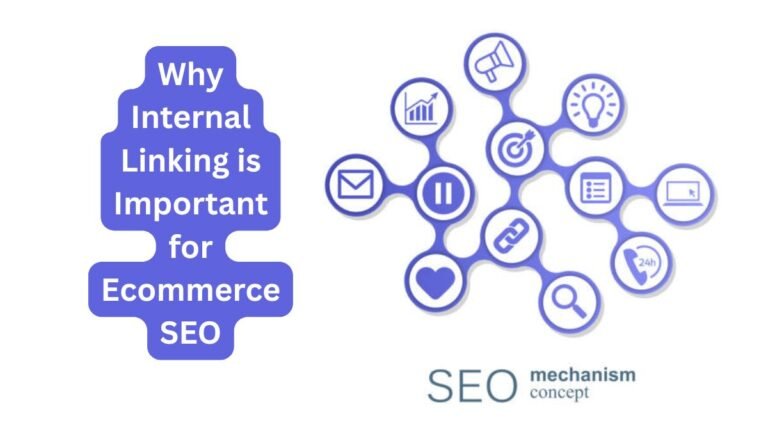
Internal Linking Power Play: Smart links distribute authority, improving rankings. Big players like Wayfair master this.
Big Changes in 2026 | Future-Proof Your Ecommerce SEO
SEO is less about ranking pages and more about brand trust:
- AI search: conversational answers reduce clicks to websites.
- Zero-click searches: snippets, maps, and review boxes.
- Visual search: images, reels, and short-form content gain weight.
- EEAT: Experience, Expertise, Authority, Trust signals matter.
Observation:
Brands that blend SEO with content marketing, UX, and social proof win big.
Step-by-Step SEO for Beginners & Pros
- Keyword Research: Focus on buyer intent
- Site Structure: Clean, logical categories
- On-page SEO: Titles, headings, UX, speed
- Content Strategy: Blogs that sell
- Technical SEO: Indexing, schema, Core Web Vitals
- Link Building: Safe and relevant links
- Conversion Optimization: CTAs, layout, and microcopy
Common Mistakes That Kill Ecommerce SEO Growth
- Chasing traffic instead of revenue
- Thin product content
- Duplicate pages
- Poor internal linking
- Ignoring mobile speed
- Hiring cheap agencies without proven results
How to Measure If Your SEO Agency Is Driving Sales
Traffic is only one metric. Focus on:
- Revenue lift
- Conversion rate
- Keyword growth
- ROI
- Monthly benchmarks
Example: a medium-size home decor store measured SEO impact via revenue increase rather than clicks. After three months, sales rose 18%, proving ROI.
Quick Checklist Before You Hire an SEO Agency
- Review case studies
- Ensure a clear process
- Check ecommerce experience
- Access the real team
- Avoid fake promises
Beginner or pro, these checks separate a real agency from the rest.
FAQ’s | How does the best SEO agency drive ecommerce sales?
Here are some FAQs where you can have more clarity about the sales through seo.
How does the best SEO agency drive ecommerce sales?
The best SEO agency does not chase traffic. It builds a system that turns search into revenue.
It starts with buyer intent keywords. Then it fixes product pages, improves site speed, and creates content that guides users to buy.
Top agencies also track revenue, not just clicks. That’s the real difference.
Is SEO better than paid ads for ecommerce sales?
SEO and ads serve different roles.
Ads bring fast traffic. But once you stop spending, results stop.
SEO takes time. But it builds long-term sales that keep coming without paying for every click.
The best strategy? Use both. Ads for speed. SEO for scale.
How long does ecommerce SEO take to show results?
You may see early movement in 2–3 months.
But real growth—traffic and sales—usually shows in 4–6 months.
For competitive niches in the US, it can take 6–12 months to dominate.
Quick tip: if someone promises results in 30 days, run.
What are buyer intent keywords in ecommerce SEO?
Buyer intent keywords show that a user wants to purchase.
Examples:
- “buy running shoes online”
- “best price gaming laptop”
These keywords bring sales, not just visitors.
The best SEO agencies focus on these first.
Can a small ecommerce store compete with big brands using SEO?
Yes—but not by copying them.
Big brands like Amazon and Walmart dominate broad keywords.
Small and medium stores win by targeting long-tail keywords and niche categories.
Example: instead of “shoes,” go for “best running shoes for flat feet.”
That’s where real growth starts.
What role does content play in ecommerce SEO?
Content drives discovery.
Blogs, guides, and FAQs bring users at the research stage. Then internal links push them to product pages.
Example:
“How to choose a mattress” → blog
→ links to product pages
→ user buys
That’s how content turns into sales.
What are the most important ecommerce SEO ranking factors in 2026?
Focus on what moves the needle:
- Search intent match
- Page speed and mobile UX
- Strong internal linking
- Product page quality
- Brand trust signals
Google rewards stores that solve problems, not just list products.
How do SEO agencies improve ecommerce conversion rates?
They fix what most store owners ignore.
- Clear product titles
- Better images
- Fast loading pages
- Strong CTAs
- Trust signals like reviews
Example: improving product page layout alone can lift conversions by 10–30%.
Traffic stays the same. Sales go up.
What mistakes should I avoid in ecommerce SEO?
Here’s what kills growth fast:
- Targeting wrong keywords
- Thin product descriptions
- Ignoring mobile users
- No internal linking
- Focusing only on traffic
One hard truth: traffic without sales is just noise.
How do I know if my SEO agency is actually driving sales?
Don’t get impressed by traffic reports.
Check real numbers:
- Revenue growth
- Conversion rate
- ROI
- Sales from organic traffic
If sales don’t grow, you can have three issues:
SEO is not working — check organic traffic and clicks
SEO Copywriting is not working — check add-to-carts and checkouts.
If you still have no sales or fewer sales, your product or price can have issues.
In a nutshell, every problem has a reason, no matter what the report says.
Conclusion
SEO is more than ranking. It’s building a machine that prints sales. The best SEO agencies don’t just chase traffic—they craft systems, align keywords with buyer intent, fix revenue leaks, and future-proof your store. Understanding how the best SEO agency drives ecommerce sales is all about balance and consistency with expertise. It’s User first, Google second.
The recipe I shared here is actionable. Test it, tweak it, and combine it with your products and offers. Real ecommerce success doesn’t come from paid courses or secret formulas—it comes from execution, learning, and smart experiments.